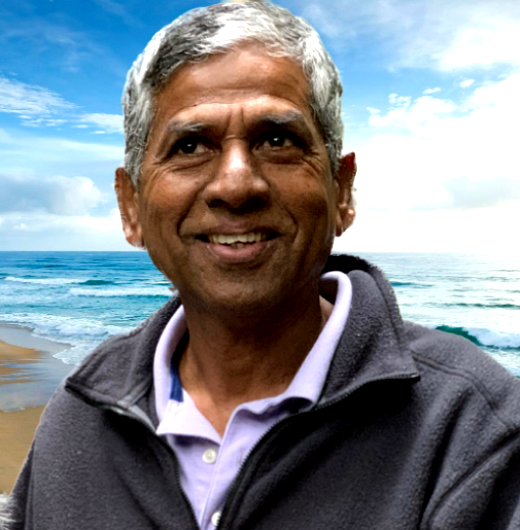

“We have only done our duty.”
From childhood, I have been a worker.
I have never considered this a weakness or something to regret. On the contrary, I look back on it with joy.
My village was a small coastal village. Our house had a thatched roof and an earthen floor. At night, we would spread dried sea sand on the floor before sleeping. This kept the floor cool. So every day I would walk a long distance along the seashore, fill a large box with dried sea sand, and bring it home.
My father was a fisherman. I helped him with the small tasks required for his work. I would go into the forest and bring back firewood. Working like this became part of my daily life from a very young age. I do not remember ever thinking of work as a burden.
Later, while I was studying at the seminary, the same way of life continued. I willingly did such tasks as washing toilets, pulling weeds in the garden, and cleaning the halls. I did not avoid a task simply because others did not want to do it. Someone had to do it, after all! I had no hesitation about doing it.
Even after I was saved, the same life continued. Only the places and forms of the work changed.
I cleaned meeting places, wiped the chairs on which the saints sat, and washed and cleaned the venue after meetings. I booked travel tickets for the saints, went to railway stations to welcome them and see them off, and made arrangements for their accommodation.
I organized annual conferences, supervised food arrangements, translated messages, copied and distributed them, and helped with wedding arrangements. The forms of service kept changing. Some tasks were small; some were large. Everyone saw some of them; many of them were seen by no one.
But to me, they were all the same work—service.
And this list could go on and on.
From time to time, I spoke at meetings. I preached. Some may have benefited through my speaking.
But as time passed, one thing about myself became increasingly clear to me:
I am a worker.
Speaking does not make me a teacher. Preaching does not make me an evangelist. Caring for the needs of others does not make me a shepherd. The fact that some may have benefited through me does not change my calling.
Even today, this is my basic understanding of myself:
I am a servant.
But do I always remember this?
No.
Sometimes I begin to think of myself differently. The things I have done begin to look great in my own eyes. I begin to think of the work entrusted to me as my own work. I begin to move, little by little, away from the position of a servant.
Then God does not leave me alone.
Through people, through His Word, and through circumstances, He pricks me and brings me back to my original place.
Some pricks hurt.
But that pain is necessary for me.
Because it leads me once again to an old question:
What is ministry? Who is a servant?
Ministry means service and work. A minister is a servant (Matt. 20:26; 22:13), a worker (Matt. 10:10).
The problem begins when I forget this simple truth.
In Luke 17:7–10, the Lord Jesus places a servant before our eyes. The servant returns home after plowing the field or tending the flock. But when he comes home, his work is not finished. He still has to serve his master. After completing everything he has been commanded to do, he is to say:
“We are unworthy servants; we have only done our duty.” (Luke 17:10)
These words often bring me back to my proper place.
“We have only done our duty.”
This does not mean that a worker has no value. Nor does it mean that he should not be paid. The Lord Himself said, “The worker deserves his wages” (Luke 10:7).
But a worker does not claim rights from his master on the basis of his work.
“I have done this much. Therefore, I deserve this.”
“I have worked for so many years. Therefore, I should be treated this way.”
“I have given this much. Therefore, I should receive this honor.”
When such calculations begin, I realize that I have started moving away from the mindset of a servant.
Salary, gifts, rewards, hospitality, praise, thanks, holidays, recognition, and honor are not wrong. Nor is it wrong to receive them. But if I serve expecting these things, the very nature of my service changes.
For a worker, the master’s command and the duty entrusted to him are primary.
And when he comes to love his master and the master’s household, his service is no longer merely a duty.
Without keeping account of bodily weariness, hunger, sleeplessness, humiliation, loss, or the harm done to him, and without being consumed by anxiety about tomorrow, he pours himself out wholeheartedly “in the field and in the house”—both outwardly and inwardly.
The One who walked this path before us is the Lord Jesus.
He came
“not to be served, but to serve...” (Matt. 20:28).
He Himself said,
“I am among you as one who serves” (Luke 22:27).
He was the Master. Yet He served.
He was the Lord. Yet He washed the disciples’ feet.
He possessed all authority. Yet He poured Himself out.
When I look at Him, I understand that ministry is not a platform. It is not a position. It is not a title. Nor is it determined by what others call me.
Ministry is service. A minister is a servant.
It is easy to write this truth. Living it is difficult.
Because the “I” within us does not refuse to work. It will do many things. It will even make sacrifices. It is willing to suffer.
But one day, it begins to keep an account of the work it has done.
“Did anyone notice me?”
“Did they thank me?”
“Did they respect me?”
“Do they remember what I did?”
When these questions arise, I do not want to blame others. I want to look at my own heart—the heart that raises these questions.
Because the Master has not forgotten.
That is enough.
Many years have passed. The forms of the work I have done have changed. People have changed. Circumstances have changed. I, too, have changed.
But there is one thing I do not want to forget until the end of my life:
I am not the master.
I am not the owner of the house.
This work does not belong to me.
This house does not belong to me.
I am a servant.
My responsibility is to complete the work my Master has given me, within the time He has allotted, and in the way He desires.
One day my service will end.
When I stand before my Master’s face on that day, I do not want to hold a list of the things I have done and claim anything from Him.
It will be enough if I can truthfully say:
“I have only done my duty.”
Until then,
I must fulfill the course of service entrusted to me.